East Grampian Coastal Partnership
www.stateofthecoast.scot
East Grampian Coastal Partnership
www.stateofthecoast.scot
The North East is the historical centre of Scotland’s fishing industry. While dominated by large-scale pelagic and demersal vessels, the inshore fleet (<10m) makes up the majority of registered vessels by number, typically focusing on high-value shellfish and mixed demersal species within 12 nautical miles of the coast. The inshore fleet on the northeast coast remains commercially important but is facing multiple, interacting pressures including changing stock composition, regulatory changes, spatial restrictions, and social pressures (declining/ageing workforce and recruitment difficulties).
The composition of catches landed by Scottish (and thus many northeast) vessels has shifted markedly toward pelagic species while the relative share of demersal and shellfish landings has dropped. In 2024, pelagic species made up 57% of total tonnage landed into Scotland, with demersal fish at 31%, and shellfish at 12%. This is reflected at northeast ports where pelagic seasons now drive much of the annual tonnage through Peterhead and Fraserburgh. By contrast, many traditional inshore targets (brown crab, nephrops, scallop and some demersal species which are higher value targets) now represent a smaller proportion of total weight landed into the region than ten years ago. That compositional change has practical consequences for small inshore vessels: many are less able to pivot to large-scale pelagic fishing, so inshore crews face seasonal squeeze, narrower market options and greater dependency on a small number of high-value seasons. From 2020 to 2024, the number of active registered near shore vessels has decreased by 9.2% on the Grampian Coast (Table 1).
Recent years have seen tighter spatial restrictions through the expansion and refinement of Marine Protected Areas (MPAs) and No-Take Zones, including features-based protections that limit dredging and trawling in inshore grounds traditionally used by small vessels (Figure 1). In parallel, new creel and effort controls in some fisheries (particularly for crab and lobster) and strengthened landing obligations have increased compliance costs for small boats.
The nearshore fleet has been strained by declining crew availability. Ageing skippers and difficulty attracting apprentices have intensified concerns about succession and continuity. At the same time, rising costs of living and housing pressure in parts of Aberdeenshire make it harder for small-vessel crews to remain in the industry. Communities have also experienced shifting perceptions of fishing, with fewer families connected to the sector, weakening the traditional social networks that once supported inshore operations.
The value of landings across the northeast Scotland districts shows noticeable changes from 2020–2024. Fraserburgh and Peterhead consistently account for the highest landing values, but both have seen declines since their 2022 peaks. Aberdeen’s landing values remain much lower overall and have stayed relatively stable, fluctuating within a narrower range over the five-year period (Table 2).
Fishers have also reported that recruiting and retaining crew has become increasingly difficult, largely because local workers are deterred by low wages, long hours, physically demanding work, and the cost and time required to obtain mandatory certifications. Seasonality also shapes fishing activity, with fishers adjusting where they operate, what species they target, and which gear they use depending on the time of year. This can make recruiting and retaining crew for vessels a challenge.
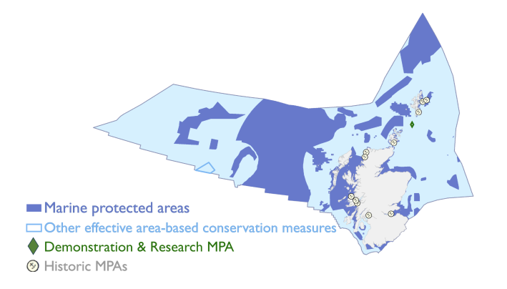
Figure 1. The entire MPA network (as of August 2025):
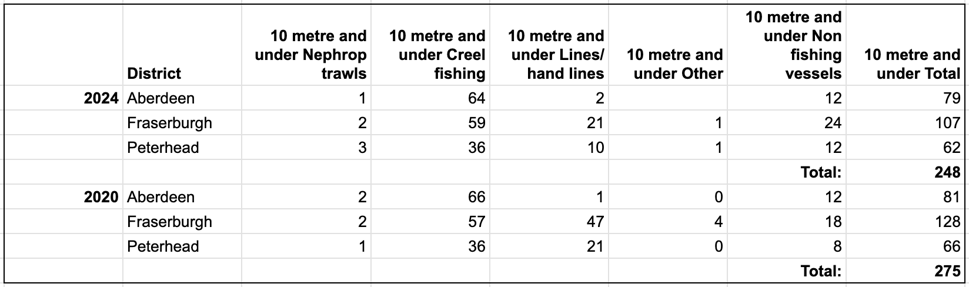
Table 1: Inshore fleet vessel numbers from 2020 and 2024, Scottish Sea Fisheries Statistics 2020- 2024
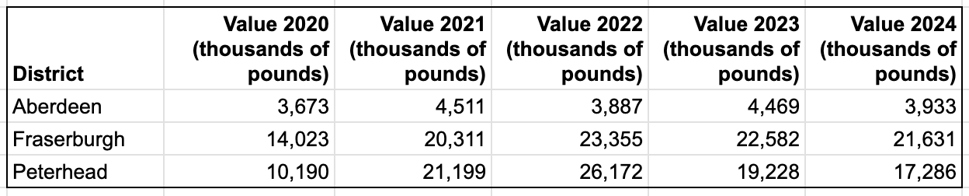
Table 2: Inshore fleet vessel landing values from 2020 to 2024, Scottish Sea Fisheries Statistics 2020- 2024
Live - Next review due 15/01/2027
To report errors, highlight new data, or discuss alternative interpretations, please complete the form below and we will aim to respond to you within 28 days
Telephone: 07971149117
E-mail: ian.hay@stateofthecoast.scot
We need your consent to load the translations
We use a third-party service to translate the website content that may collect data about your activity. Please review the details in the privacy policy and accept the service to view the translations.