
www.stateofthecoast.scot
www.stateofthecoast.scot
Pressures/ regulations on Underwater Noise and Habitat Disturbance
Underwater noise is increasingly recognised as a form of pollution that can disrupt marine life, particularly for acoustically-sensitive species such as harbour porpoises, seals, and some fish. Sound plays a critical role in marine animal behaviours, including foraging, communication, navigation and predator avoidance, and anthropogenic noise can mask these biological signals, displace animals from key habitats, and lead to stress or injury when repeated exposure occurs. While there are no specific regional measurements publicly reported for Aberdeenshire alone, broader assessments under the OSPAR Commission’s Quality Status Report (2023) indicate that shipping noise is the dominant source of continuous underwater noise in the North Sea, and that the risk of disturbance to harbour porpoises from impulsive noise has fluctuated in recent years, increasing by about 31% between 2017 and 2019 after an earlier decline.
In the East Grampian context, significant sources of underwater noise stem from shipping traffic around the major harbours and offshore construction activities. The Draft Updated Sectoral Marine Plan for Offshore Wind Energy highlights that construction activities, especially piling and geophysical surveys, can generate substantial underwater noise capable of causing behavioural disturbance or temporary habitat abandonment by marine mammals and fish near installation sites (Scottish Government, 2025). Noise levels from vessels themselves can be audible to porpoises within several kilometres of the source, and although shipping noise may be continuous and lower intensity compared with impulsive construction noise, the sounds remains a concern.
Regulatory frameworks at UK and Scottish levels are evolving to address these pressures. Under the Marine Strategy Framework Directive (MSFD), implementation of Descriptor 11 (energy, including underwater noise) requires that anthropogenic sound, both continuous and impulsive, be managed so it does not adversely affect the marine environment at a population level, with threshold recommendations limiting the proportion of habitat exposed to harmful noise levels (e.g., restricting continuous noise above biologically-adverse effect thresholds to ≤ 20 % of habitat area) (European Commission, 2025). In Scotland, the Marine Directorate regulates marine licences for activities out to 12 nautical miles (and offshore with UK oversight), assessing proposals for underwater noise impacts as part of environmental impact assessments. The National Marine Plan Review underscores that shipping and offshore construction are among the primary sources of underwater noise, and that noise management must be incorporated into marine planning and licensing decisions to protect biodiversity. Furthermore, updated JNCC mitigation guidelines now require developers to demonstrate efforts to reduce underwater noise, particularly in sensitive habitats such as those used by marine mammals (JNCC, 2024).
Despite these frameworks, quantitative monitoring data remain limited, and regional pressures in the North Sea around coastal Aberdeenshire are expected to increase with future maritime activity growth, including port expansion, shipping frequency and offshore renewable development. Continuous engagement between industry, regulators, and scientists through marine licences, strategic environmental assessments, and sectoral marine plans helps ensure that underwater noise is considered alongside other stressors.
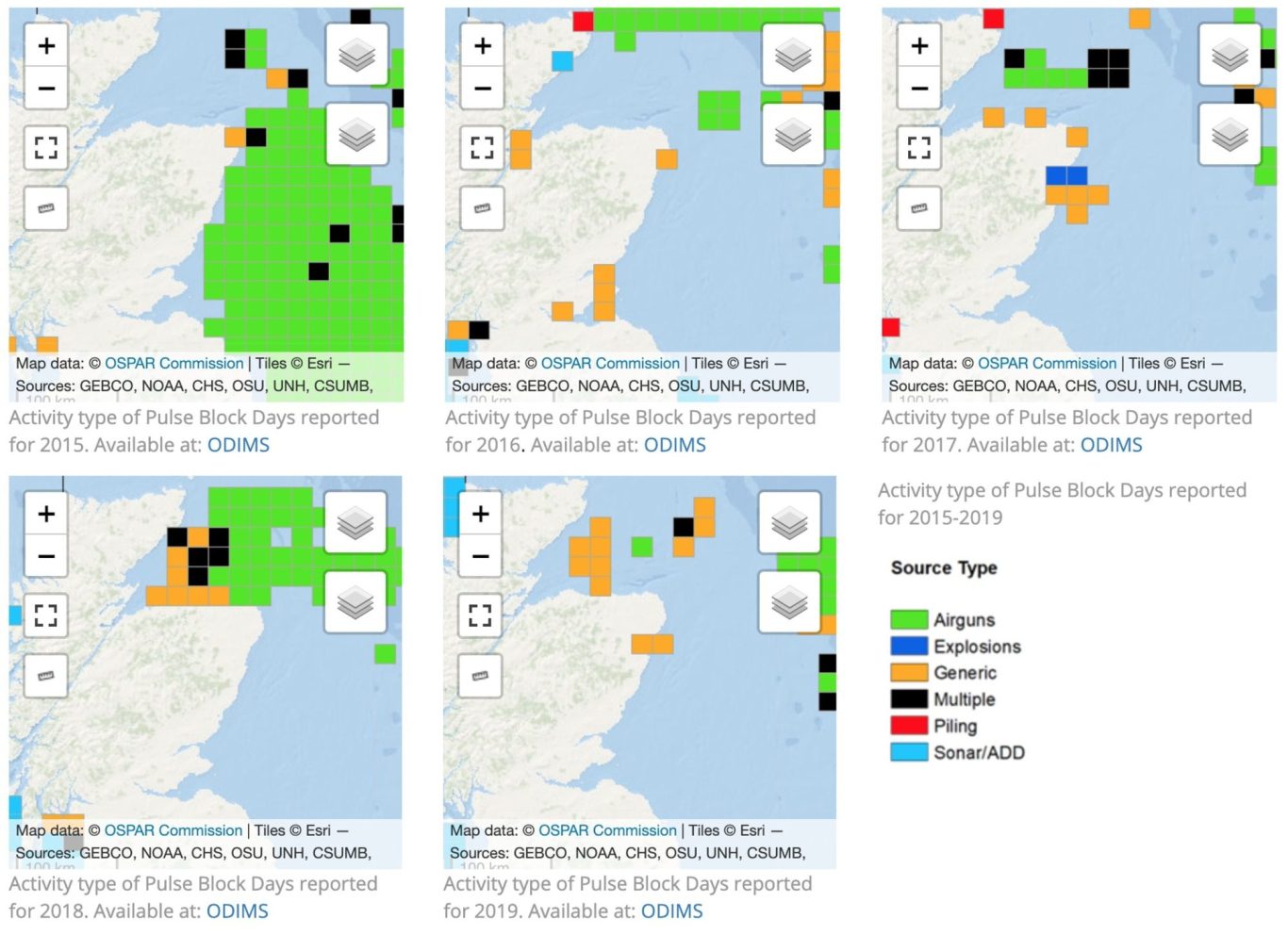
Figure 1: OSPAR Reported impulsive noise from 2015 to 2019, OSPAR
13/01/2025 by Corinne Meinert
24/01/2026 by Mariia Topol
Not Live - Next review due 24/01/2027
To report errors, highlight new data, or discuss alternative interpretations, please complete the form below and we will aim to respond to you within 28 days
Telephone: 07971149117
E-mail: ian.hay@stateofthecoast.scot
We need your consent to load the translations
We use a third-party service to translate the website content that may collect data about your activity. Please review the details in the privacy policy and accept the service to view the translations.