www.stateofthecoast.scot
www.stateofthecoast.scot
Pressures on Habitat Loss, Degradation, and Fragmentation
Coastal habitats in the East Grampian region are experiencing measurable loss, degradation, and fragmentation that directly affects biodiversity. While at times, local data for individual sites is sparse, national and UK-level statistics provide clear context for regional trends. Scotland’s coastal ecosystems include saltmarsh (about 7,076 ha) and sand dune systems (more than 50,000 ha, which constitute roughly 71 % of Great Britain’s sand dune resource) and these habitats host specialized plant, invertebrate, and bird communities that are sensitive to environmental change. Sea level rise, storminess, and coastal squeeze (where natural shorelines are prevented from migrating inland by development or hard defences) reduce the capacity of these habitats to adjust, leading to both physical loss and fragmentation of ecological niches (CREW, 2017).
Longer-term UK assessments help illustrate the magnitude of historical coastal habitat loss experienced in northeast Scotland. For example, saltmarsh extent in the UK has declined by approximately 15 % since 1945, and a further 4.5% decrease is forecasted over the next 20 years due to sea level rise and coastal change. Similarly, sand dunes have declined by about 30 % since 1990 with continued minor projected losses from erosion and sea level rise. These trends, driven by development, land‐use change, sea-level rise, and climate-related erosion, cause similar pressures on East Grampian’s dune and saltmarsh habitats, which form critical biodiversity hotspots along the coast (Office for National Statistics, 2016).
Marine and intertidal habitats are also under stress. Broader Scottish analyses show that intertidal communities, such as blue mussels and other key species on rocky shores, are declining as water temperatures rise and habitat conditions change, which in turn affects species that depend on them for food and shelter. Scotland has also witnessed significant losses of seagrass meadows (nearly 60 % decline since the mid-19th century), reducing nursery habitat availability for fish and invertebrates, and contributing to fragmentation of underwater ecosystems (Scottish Government, 2025). While much of this data is not specific to Aberdeenshire alone, similar northern North Sea coastal dynamics mean that regional biodiversity is unlikely to be immune to these broader habitat degradation trends. The significance of Scotland’s marine ecosystems is demonstrated by the wide range of international and national designations that protect them, helping to safeguard habitats and maintain biodiversity (Figure 1).
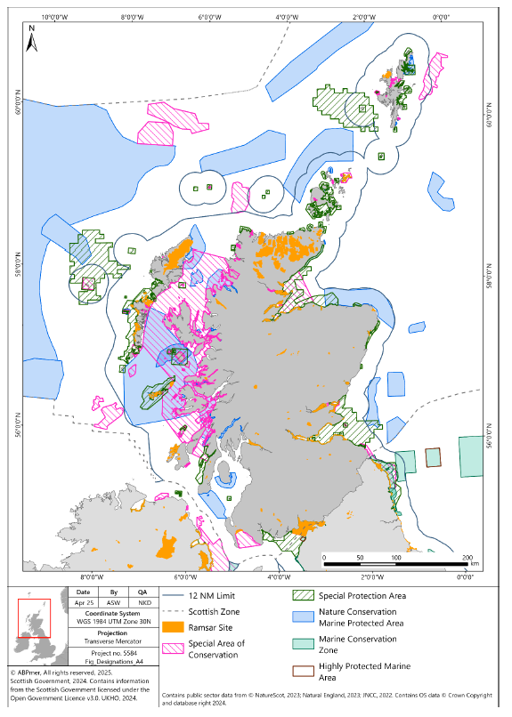
Figure 1: Designated areas in the Scottish Zone, Scottish Government
None
06/01/2026 by Corinne Meinert
13/01/2026 by Mariia Topol
Not Live - Next review due 06/01/2027
To report errors, highlight new data, or discuss alternative interpretations, please complete the form below and we will aim to respond to you within 28 days
Telephone: 07971149117
E-mail: ian.hay@stateofthecoast.scot
We need your consent to load the translations
We use a third-party service to translate the website content that may collect data about your activity. Please review the details in the privacy policy and accept the service to view the translations.